
Hammond Directory Runs by Year
Hammond city directories survive as several distinct runs, not one unbroken shelf. The Indiana State Library holdings list is the best year-by-year inventory. It names the early combined directory, Smith editions, federal microfilm, Polk volumes, and later county editions. The Suzanne G. Long Local History Room keeps local copies and related books. When a listed year is absent, use the closest earlier and later volumes and treat the gap as unknown. A person missing from one edition may have moved, been omitted, changed a name, or lived outside that publisher’s coverage.
| Collection | Years found | Where held | Access route |
|---|---|---|---|
| Hammond and East Chicago directory | 1889 | Indiana State Library | Catalog and library request |
| Smith’s Hammond editions | 1911-12; later 1914, 1919, 1921-24 | State Library and cited local holdings | Reading room or cited volume |
| United States city-directory microfilm | 1917-19, 1921-24, 1926-29 | State Library and local history room | Microfilm in person |
| Polk Hammond directories | 1928; 1948-58; selected years through 1979-80 | State and Hammond libraries | Print, microfilm, and some scans |
| Haines criss-cross directory | 1980, 1981, 1984, 1985, 1988 | Calumet Room holdings cited in a federal survey | Ask local-history staff |
| County-wide Polk volumes | 2012, 2015, 2020 | Indiana State Library | Catalog and reading-room request |
The federal architectural survey for Hammond’s Arcade Building adds useful edition details. It cites Polk volumes for 1928, 1929, 1931, 1937, 1939, 1959, 1961, 1963, 1964, 1971-74, 1976, and 1979. Those citations help identify a likely book, but the holding library must confirm access and completeness.
Hammond’s Cross-Border Directory Story
The first located Hammond city directory dates to 1889 and combines Hammond with East Chicago-area communities. Smith’s 1911-12 title goes farther, naming West Hammond, Illinois. That regional frame matters. A failed search under “Hammond” alone may reflect the printed heading, not a missing person. Search the nearby city label, then check the street and address portion of the same volume.
Hammond was incorporated in 1884, while Marcus Towle’s town plat dates to 1875. Earlier residents may surface in plat, tax, church, newspaper, or North Township records before they appear in a formal directory. Lake County was organized in 1836, and Crown Point became the county seat, so early official material may be held outside Hammond. The State Library’s Lake County research guide points toward land, court, naturalization, marriage, birth, death, newspaper, and microfilm sources when the city-directory trail ends.
Search tip. Try Hammond, East Chicago, and West Hammond labels before deciding that an early directory omitted the household.
Search Hammond Directory Scans
Several Hammond city directories can be read online. The Internet Archive Hammond directory search leads to volumes from the 1920s through later decades. Individual items include September 1928, April 1938, and a 1954 scan. Searchable OCR is a useful first pass, but it can confuse initials and familiar street names such as Hohman and Calumet. Always open the page image around a match.
The digitized Hammond directory search shows how the online shelf appears before a reader opens an edition.
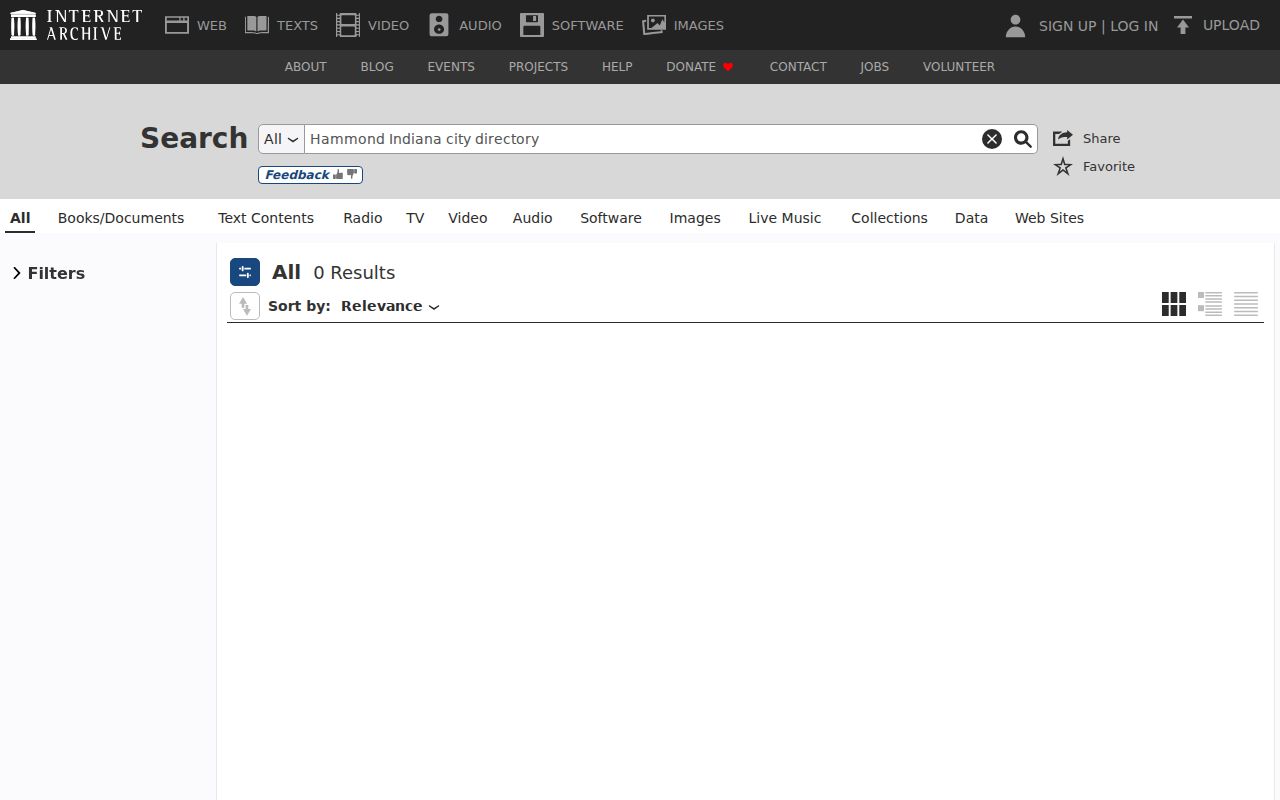
The screenshot is a discovery screen, not proof of a name or address. Record the edition, page, and visible line from the scan so another person can repeat the search.
PastPerfect serves a different role. The Hammond historical catalog can be searched by person, street, event, subject, or object. Its record may describe an item that must still be requested from staff. Catalog metadata is a finding aid, not a promise that every page is online.
Decode a Hammond Directory Entry
A 1928 Hammond city directory entry can pack several facts into one short line. The scanned alphabetical section includes a name, initials, a residence or office marker, a street number, an abbreviated street, and sometimes a trade, company, spouse, room, or boarding note. These are historical conventions. They do not prove where someone lives now.
| Indexed name | Surname, given name, and initials used for alphabetical placement |
|---|---|
| Relationship mark | A spouse, widow, householder, or household note when the publisher included one |
| Work descriptor | A trade, firm, credential, or office line that separates people with similar names |
| Place marker | “r” for residence or “ofc” for office in the sampled 1928 format |
| Address text | House number, street name, street abbreviation, and any room or boarding mark |
Photograph or save the abbreviation key when it is available. OCR may drop symbols that distinguish an office from a residence. Reading the neighboring entries also helps show where one surname ends and the next begins.
- Criss-cross directory
- A reverse section arranged by street and address instead of by surname.
- Householder index
- A list centered on the named person responsible for a household entry, not every occupant.
- Abbreviation key
- The publisher’s legend for marks, street types, roles, and other shortened terms.
- OCR
- Machine-read text from a scan. It speeds discovery but must be checked against the page image.
Hammond’s Local History Shelf
The Suzanne G. Long Local History Room is the practical home base for a Hammond city directory search that cannot be finished online. Its archives began in 1967 through cooperation with the Hammond Historical Society. Holdings include city directories, telephone books, maps, plat books, photographs, family and biographical files, high-school yearbooks, scrapbooks, and Hammond newspapers on microfilm.
The Hammond library local-history page shows the library’s own collection and service details.
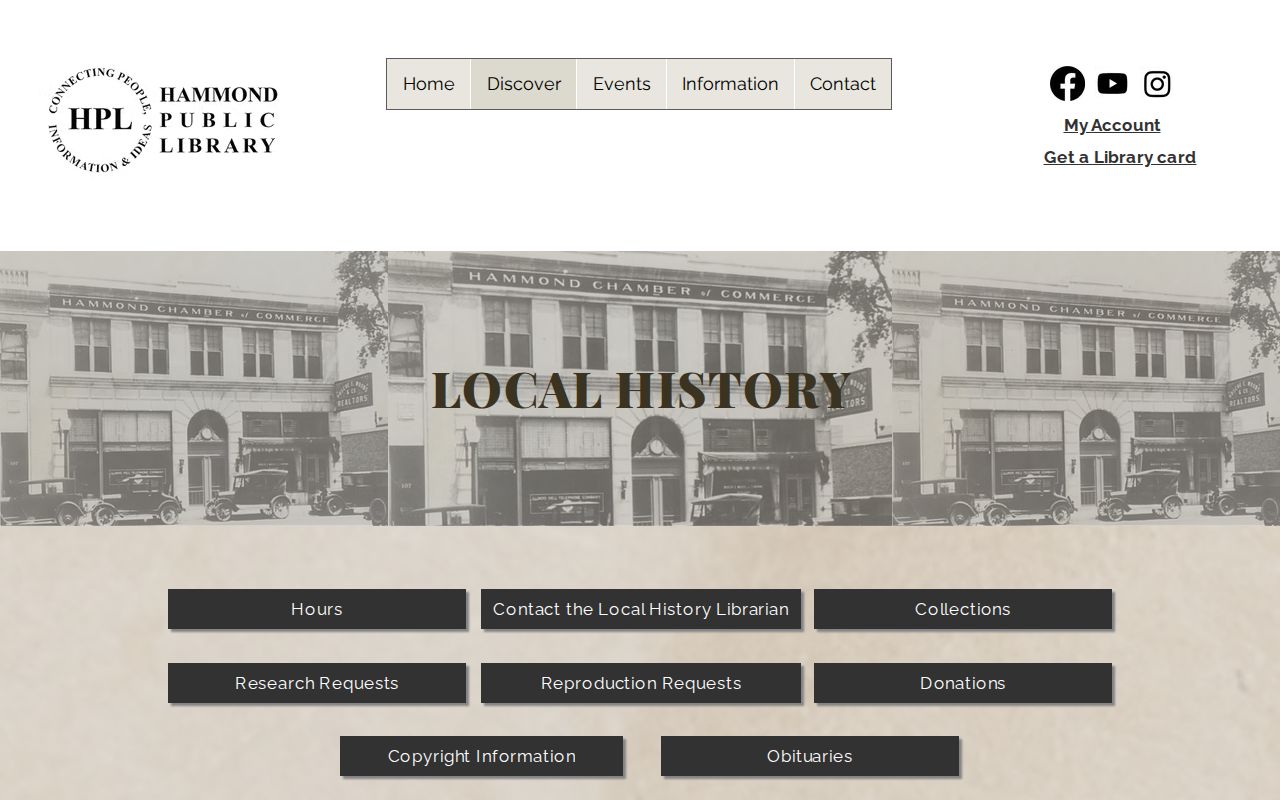
That local shelf lets a researcher move from one directory name to a yearbook, obituary, plat, or newspaper page without treating any one source as complete.
The room lists Tuesday and Thursday hours from 1 to 5, Wednesday from 1 to 9, and Friday from 9 to 1, with some other visits by appointment. Call 219-931-5100 ext. 307 before travel. Staff may fill a request based on size and availability. Self-research with staff help is encouraged. Copies or scans are listed at $0.10 per page, while high-quality reproduction and permission are separate requests. The library is at 564 State Street.
Hammond City Directory Timeline
Publication changes explain why one search method will not cover every period. The timeline marks the major known runs without filling gaps that the research did not prove.
| Period | Directory milestone |
|---|---|
| 1889 | First located combined Hammond and East Chicago directory |
| 1911-24 | Smith titles and later editions include regional and West Hammond references |
| 1917-29 | Near-annual Hammond microfilm fills much of the early twentieth-century span |
| 1928-79 | Polk print, microfilm, and selected digitized editions provide name and street snapshots |
| 1980-88 | Haines criss-cross volumes support reverse address searching in selected years |
| 2012-20 | County-wide Polk editions add later regional context |
The State Library Lake County guide documents the directory holdings and related record groups.
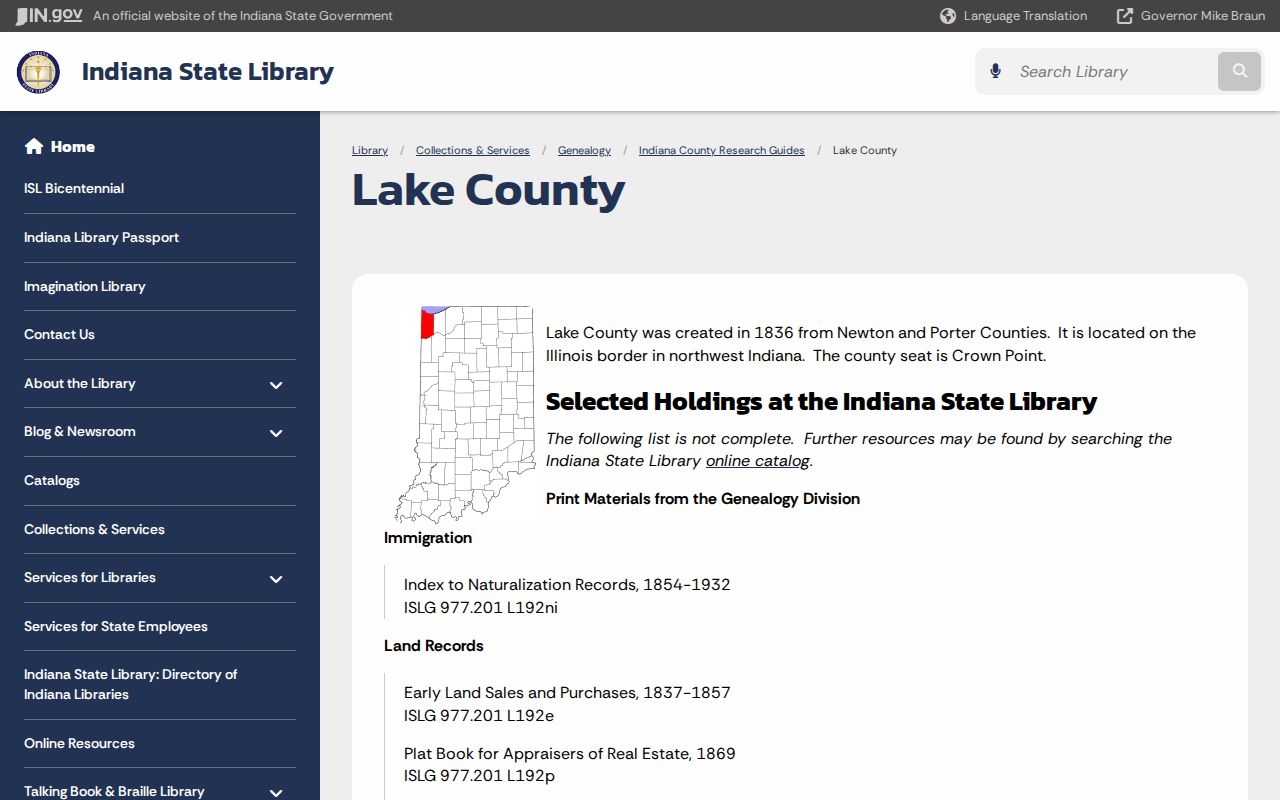
The guide helps separate original county records from library indexes and copies, an essential distinction when certified evidence is needed.
Hammond Records Beyond Directories
A directory gives a dated snapshot, while companion collections explain change. Hammond plat books are documented for 1873, 1880, 1886, 1895, 1903, 1907, 1911, 1915, and 1922. North Township surveyor and assessor records span 1846-1922. The local room also holds 1846 tax records and indexes. These sources can place a lot or owner before modern parcel numbers existed.
Federal census schedules through 1950 are open under the 72-year rule. Pair the nearest census with a city directory, but account for the census date and the directory publication date. Newspaper and obituary materials from the Hammond Times and Northwest Indiana Times can add death dates, relatives, funeral homes, and burial clues. The library states a 1931-2019 retrieval span, while visible annual index headings extend later. Ask staff to confirm the exact year and issue.
Church registers may supply births, marriages, deaths, or membership before statewide registration, though no single Hammond parish index was found. Naturalization material listed for Lake County covers 1854-1932. Each source has its own keeper and access terms, so the directory name should be carried into the correct archive rather than treated as final proof.
Note: The full historical collection path may involve an online catalog, a phone request, an in-person microfilm reader, and a county custodian.
Trace Hammond Families Across Editions
Following one household across Hammond city directories works best as a recorded sequence. Keep spelling variants, exact page citations, and street text for each year. A name that vanishes may signal a move, death, marriage, omission, or an edition gap. The next source should test those possibilities.
- Search the surname and first initial in the alphabetical section. Save every middle initial, spouse mark, work descriptor, symbol, and address.
- Check the street or reverse section in the same edition. Try old street forms and abbreviations, then note nearby entries only as historical context.
- Move to the nearest earlier and later available editions. Do not invent continuity across a missing year.
- Pair the directory with the closest open census, plat, deed, tax record, obituary, or newspaper page.
- For selected 1980s years, use Haines criss-cross volumes to move from an address back to a listed householder.
- Record the collection name, call number, edition, page, and image. Recheck every OCR match against the scan.
A former classmate search can begin with Hammond High, Hammond Tech, Clark, Gavit, Morton, Bishop Noll, City Baptist, or another yearbook in the local room, then move to directories and obituary indexes. Use a voluntary current contact channel if one exists. For modern address-keyed research, the Hammond street directory owns the parcel and deed workflow.